Home > Products > SenSpot™ > Wireless Scour Probe
The Wireless Scour Probe SenSpot™ Sensor provides an easy-to-install, scalable solution for monitoring scour, erosion, and sediment levels around bridges, dams, and other critical infrastructure.
Bridge scour refers to the removal of sediment such as sand, soil, and rocks from around bridge piers or abutments by fast moving flood currents. It can cause erosion around the bridge piers or abutments. As scour occurs progressively, supporting material around the bridge foundation is removed and it can lead to settling or other forms of foundation instability.
Utilizing innovative technology, this hydraulic damage measuring sensor offers a reliable method to monitor soil and sediment levels near bridge foundations, ensuring early detection of erosion and potential foundation instability.
The sensor includes multiple sediment sensing nodes connected through a flexible, waterproof tube, which can be customized in length and spacing according to application needs. This probe can be buried into sediment at high-risk scour locations and encapsulated in a stainless-steel profile for easy installation.

without battery replacement

0.1 mg resolution

Self-adhesive(e.g. steel)/
flange-mount(e.g. concrete)

1 km free space

easy to reuse in other places

-40 to +65°C (-40 °F to +150°F)
• Long battery life• Lightweight• Easy mounting (flange mount or adhesive tape)• Ingress Protection: IP67• Maintenance-free
• Bridge Scour Monitoring: Detect and monitor scour around bridge piers and abutments.• Hydraulic Structure Monitoring: Assess scour conditions around dams, weirs, and other hydraulic structures.• Slope stability monitoring: Assess and ensure the stability of slopes to prevent landslides and erosion.• Soil consolidation analysis: Monitoring stability in areas at risk of structural damage from heavy construction, floods, and geotechnical effects.

A wireless scour probe is a sensor used to monitor erosion or sediment loss around bridge foundations, piers, and other hydraulic structures. It detects changes in riverbed levels and transmits the data wirelessly, helping engineers monitor scour conditions in real time.
A wireless scour monitoring sensor is installed near bridge piers or foundations to measure changes in the riverbed. As sediment is removed by water flow, the probe detects the depth change and sends the information wirelessly to a monitoring system.
Bridge scour is one of the leading causes of bridge failures worldwide. Continuous monitoring using a wireless scour probe allows engineers to detect sediment erosion early and take preventive actions before the foundation becomes unstable.
Wireless scour probes are commonly installed near bridge piers, bridge abutments, culverts, dams, and river crossings. These locations are prone to sediment erosion caused by strong water currents, flooding, or changing riverbed conditions.
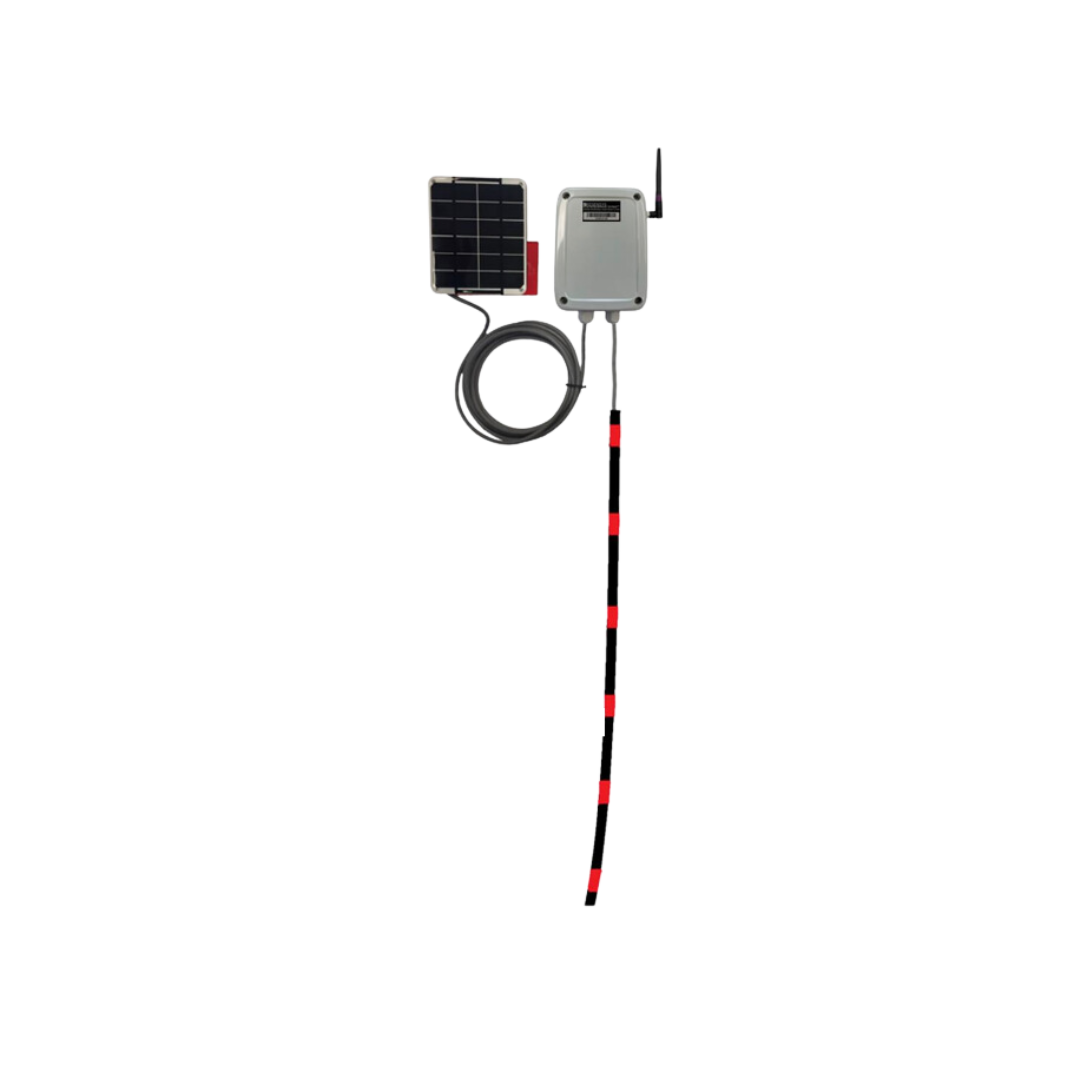
▪ Working temperature: -40°C to +65°C (-40°F to +150°F)
▪ Wireless communication range: 1.0km (0.62mi) free space
▪ Dimension (transceiver box): 140mm (5.50”) x 105mm (4.12”) x 62mm (2.44”)
▪ Customizable scour probe length: 0.3m (1ft) to 30m (100ft)
▪ Sediment detection glands: up to 8 glands along sensing probe, custom spacing from 5cm (2in) to 3m (10 feet) between successive sediment sensing glands
▪ Optional stainless-steel support: The sensing probe can be encapsulated in a U shaped stainless-steel profile in applications where the probe is inserted into sediment.
▪ Temperature sensor: each node a has a built-in temperature sensor with resolution of 1°C (Celsius)

Small wireless sensors that
make big differences
Address: 6517 Mid Cities Ave.
Beltsville MD 20705
USA
E-Mail: info@resensys.com
Phone: (301) 477 3075


