Home > Products > SenSpot™ > Wireless Crack Meter SenSpot™
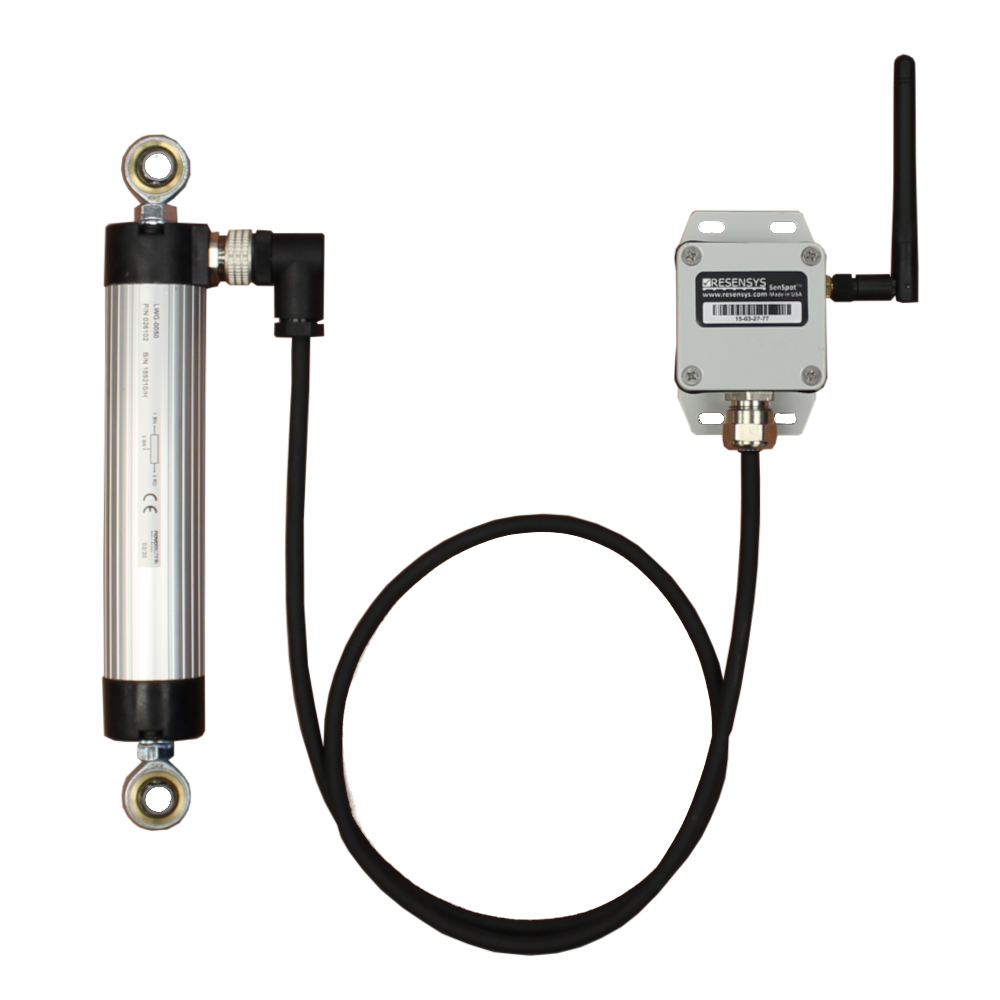
SenSpot™ is designed to operate maintenance-free for over a decade. Once installed, it does not require calibration, battery replacement, or any other maintenance throughout its entire service life. Due to its small size and light weight, the adhesive-mount wireless concrete crack monitoring gauge can be easily applied to multiple critical spots on a structure with minimal installation effort. SenSpot™ displacement crack gauge are ideal for measuring the progress of existing cracks in a structure. The device features a sliding element that moves in response to structural displacement or crack growth.
This wireless displacement sensor is well suited for both temporary and permanent monitoring deployments, allowing infrastructure owners to implement a reliable wireless displacement crack gauge solution without ongoing maintenance or site visits.

without battery replacement

0.01 mm or 0.4 mil resolution

self-adhesive(e.g. steel)/
flange-mount(e.g. concrete)

1 km free space

easy to reuse in other places

-40 to +65°C (-40 °F to +150°F)
• Long battery life (10+ years)
• Wireless communication (IEEE 802.15.4)
• Lightweight (235g), easy & fast to install adhesive mount devices
• High resolution displacement measurement
• Adjustable transmission interval • Small size: 1.3” x 3.5” (0.55” thick)
• Monitors expansion joints, bridge bearings, and crack width on structures
• Assess activity and propagation of existing cracks
• Ensure structural integrity of bridges, buildings, dams, tunnels etc.
• Monitors movement in timber structures and bridges
•
Monitors wind turbine condition to ensure foundation stability.
• Used for storage tank monitoring to ensure structural integrity.
•
Monitors railway track alignment and infrastructure stability
• Assess wall stability and identify potential risks in Retaining wall

A wireless displacement or crack meter is a sensor used to measure movement or crack growth in structures such as bridges, buildings, tunnels, and dams. It continuously tracks displacement between two points and sends data wirelessly for remote structural health monitoring.
A wireless crack monitoring sensor uses a sliding sensing element that moves when structural displacement or crack growth occurs. The sensor records the change in distance and transmits the measurement wirelessly to a monitoring system for analysis and early detection of structural issues.
Wireless displacement sensors are commonly used in bridges, buildings, tunnels, dams, wind turbines, storage tanks, and railway infrastructure. They help engineers monitor structural movement, expansion joints, and crack propagation to ensure long-term structural integrity.
High-precision wireless displacement sensors can measure structural movement with resolution as fine as 0.01 mm, allowing engineers to detect very small crack growth or displacement changes before they become serious structural problems.
• Long lifetime: minimum expected life without battery replacement 10 years
• Lightweight: about 147 g (5.19 oz.)
• Wireless transmitter: 120 g (4.23 oz.)
• Cable (1ft): 10 g (0.35oz.)
• Displacement sensing element: 100 g (3.5 oz.)
• Easy mounting:
○ Self-adhesive, no drilling is required (e.g. steel)
○ Flange-mount, drilling is required (e.g. concrete)
○ Quick installation, 1-2 minutes
• High accuracy: 0.01 mm or 0.4 mil resolution
• Wide working temperature: -40 to +65°C (-40 °F to +150°F)
• Long communication range: 1.0km free space
• Small size:
○ Wireless transmitter: 50mm (1.96”) x 50mm (1.96”) x 34mm (1.34”)
○ Crack Meter Sensor: 79/104/129/154mm (1/2/3/4”) x 22mm (0.9”) x 22mm (0.9”)
• Complementary data collected: temperature, battery voltage, etc.

Small wireless sensors that
make big differences
Address: 6517 Mid Cities Ave.
Beltsville MD 20705
USA
E-Mail: info@resensys.com
Phone: (301) 477 3075


